
The work you do both inside and outside the workplace can help to shape your career.
Kelly McPherson (Medical Laboratory Sciences, '77)
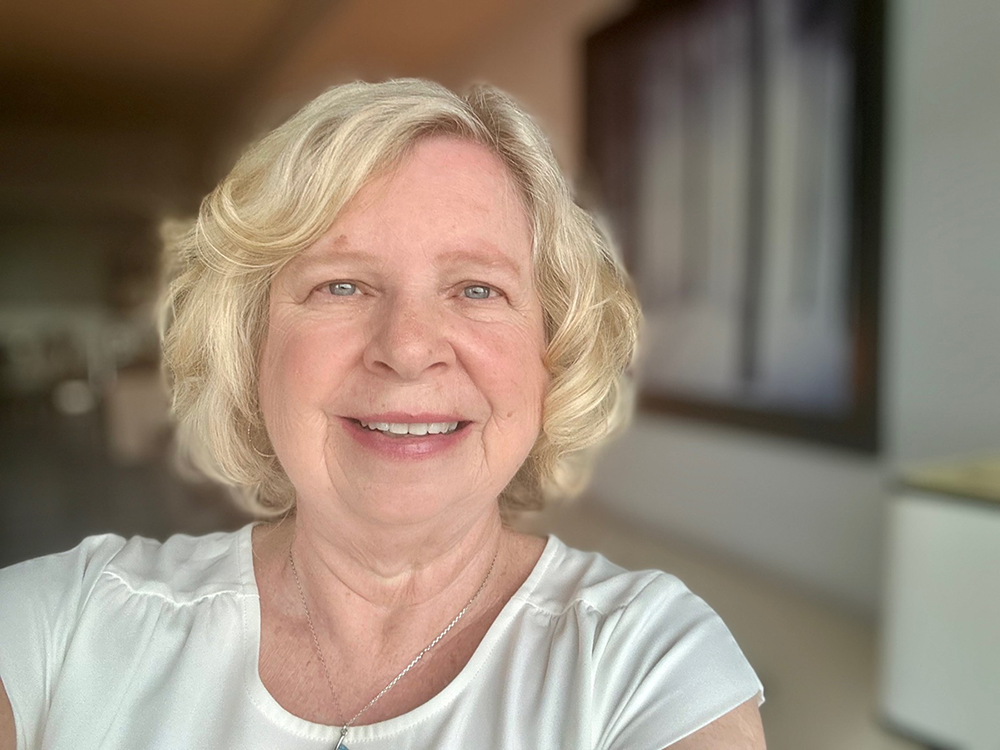
Kelly McPherson (Medical Laboratory Sciences, ’77) defined her career by seeking out opportunities. Now retired, the former medical lab technologist and Michener professor says it’s the best way to carve out a role in healthcare.
“Many people will be happy to just do their work and not take something additional on, but don’t be so quick to say ‘no’ right away,” Kelly says.
“Over the years I always told my students that once you graduate, you can’t just sit on your laurels. The work you do both inside and outside the workplace can help to shape your career.”
The Power of Stepping Up
Kelly first pursued healthcare education at what was then known as the Toronto Institute of Medical Technology. She went there directly from secondary school, as university degrees were not a requirement for practice.
Upon graduation, Kelly found work at The Hospital for Sick Children (SickKids) in Toronto. She would stay there for 22 years across various lab positions, specializing in clinical chemistry and toxicology.
Looking back over the years, she says the multiple volunteer opportunities she took on and committees she joined taught her the most about hospitals and the health system. Those roles provided her with valuable career insight and direction.
“I remember one of the restructuring committees I was on at SickKids, I was brought on as one of the few non-management members,” she says. “I learned so much being a part of that committee, which gave me a lot of confidence in my role and myself.”
“It was during a tough time in the 1990s – Ontario’s health system and laboratories were faced with challenges back then as well. But it was that kind of external work that helped me find my way in my career.”
From Lab Testing to Lesson Planning
In the early 1990s, Kelly enrolled part-time in a health services management program to get her Bachelor of Health Administration at TMU (formerly Ryerson).
“It felt like it took forever,” she says, “being a part-time student while working shifts, with a couple kids waiting at home and living out in the suburbs.”
Kelly says after more than six years she finished the part-time program, because unlike today there were no virtual options – everything had to be done in-person in the classroom.
She says it was worth further pursuing her education as it offered her new opportunities. With a degree now in hand, Kelly was eligible for a job that allowed her to teach at her alma mater.
Kelly was hired as a professor in the medical laboratory sciences program at Michener, a role she would assume until she retired from healthcare in 2017.
“It’s going to really date me to say that I found that Michener job posted in a newspaper, isn’t it?” she says, with a laugh.
Kelly says completing her degree, in combination with over 20 years of work experience across various roles, prepared her to take that step into academia with certainty.
“I had helped train students directly on the lab bench – it was only 1 to 2 students at a time, but it gave me some experience teaching on the job,” she says.
“That experience, in combination with having my degree, helped me come of my shell,” Kelly says. “I felt ready to take control of formal classroom lectures and hands on laboratory sessions.”
“It was an amazing role, I’m really glad to have gone for it.”
At Michener, Kelly kept her sense of exploration alive and got involved in different opportunities – she coordinated courses for bridging students and was an educator surveyor for accreditation.
She also was appointed the academic member on the board for the regulatory body, the College of Medical Laboratory Technologists of Ontario (CMLTO).
Recognition for the Applied Health Professionals
As she reflects on her career, Kelly says one message she would send to all current and future applied health science professionals is that their contributions are essential.
She says it’s an important thing to remember – especially in the most difficult moments.
“Whatever your applied health science program is – whether you have a lot of patient interaction like an imaging tech, or something with very little patient interaction like most med lab professionals – you are all vital to patient care and the health system as a whole,” Kelly says.
“You can take that with you, every day throughout your career. Your contributions always matter, so thank you for being there to do that important work.”