About the Profession
MRI is an imaging modality that creates images of the body using radiofrequency waves in conjunction with extremely powerful magnets. This widely used and non-invasive technique relies on the magnetic properties of atoms, rather than radiation, and provides valuable diagnostic information to aid in patient management.
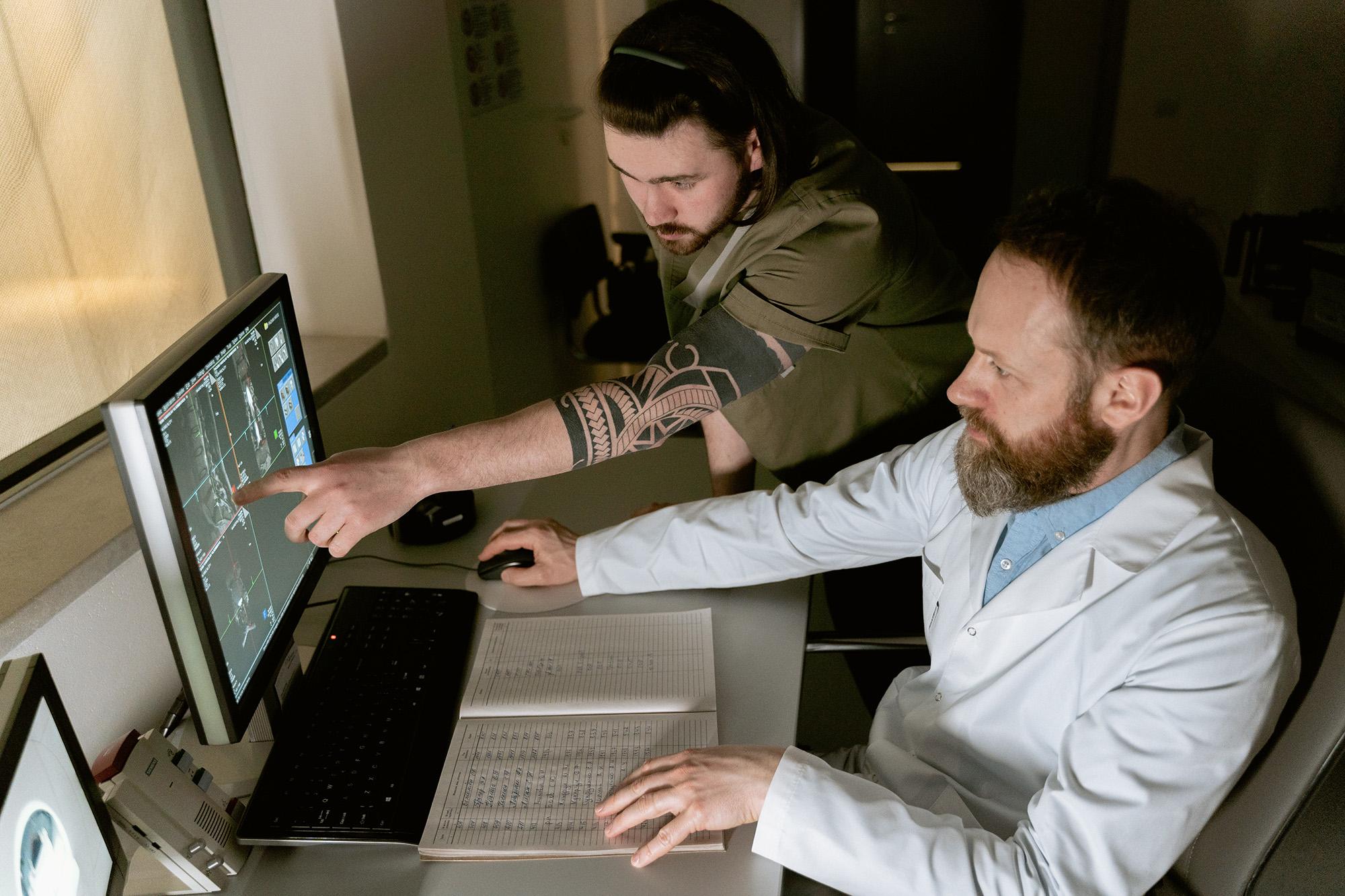
MRI technologists use their communication, patient care and collaborative skills as valued members of the healthcare team. They are responsible for the safety of patients and other staff members in the Magnetic Resonance environment. Using their knowledge of anatomy, physiology and pathology – along with the principles of MRI physics and methodology – MRI technologists operate MRI scanners to create images of a patient’s body tissues, which physicians then use as an aid to diagnose patients. The skill of the MRI technologist is extremely important in obtaining high-quality diagnostic images.
MRI Technologists find rewarding careers in clinical environments such as hospitals, diagnostic imaging centres and independent health facilities. Other career opportunities can be found in the areas of education, sales, applications and research.
About the Program
Magnetic Resonance Imaging (MRI) at Michener is a one-of-a-kind program that allows students to participate both online and face-to-face in MRI and related subject matter to help them enter directly into the MRI field. Didactic courses are delivered by expert faculty to help build a students’ knowledge base. Hands-on clinical teaching is also provided during clinical placements in affiliated hospitals and diagnostic imaging centres.
This full-time program prepares students to operate sophisticated medical imaging equipment, communicate with patients and participate as essential members of interprofessional healthcare teams. The program encourages students to develop the necessary technical, critical thinking and problem-solving skills to complete and adapt MRI procedures based on a patient’s medical condition.
Michener’s MRI program is a direct entry program, open to students directly out of secondary school to apply, and is currently registered for accreditation with Accreditation Canada. Graduates will be able to provide effective and compassionate care for patients while carrying out diagnostic medical imaging procedures in the specialty of MRI.
Certification with the Canadian Association of Medical Radiation Technologists (CAMRT) qualifies graduates to be eligible to work across Canada and apply for registration as an MRI Technologist with the College of Medical Radiation and Imaging Technologists of Ontario (CMRITO).
Curriculum - MRI
| Year | Semester | Course Code | Course Title |
|---|---|---|---|
| 1 | Fall | APRS110 | Human Anatomy and Physiology |
| 1 | Fall | PHMG110 | Applied Physics in MRI |
| 1 | Fall | PPMG110 | Professional Practice in MRI I |
| 1 | Fall | PMRS111 | Patient Care in Medical Radiation Sciences I |
| 1 | Winter | IGMG120 | Imaging in the Health Care System |
| 1 | Winter | MPMG120 | Integrated MRI Procedures I |
| 1 | Winter | PHRA110 | Radiographic Physics and Radiobiology |
| 1 | Winter | PPMG120 | Professional Practice in MRI II |
| 1 | Winter | PMRS121 | Patient Care in Medical Radiation Sciences II |
| 1 | Summer | CTRD240 | Integrated C.T. Imaging Theory and Practice I |
| 1 | Summer | MPMG130 | Integrated MRI Procedures II |
| 1 | Summer | PPMG130 | Professional Practice in MRI III |
| 1 | Summer | PRMG130 | Specialty Practice in MRI |
| 2 | Fall | CLMG240 | MRI Clinical I |
| 2 | Fall | RMIP231 | Introduction to Research Methods |
| 2 | Fall | CLMG250 | MRI Clinical II |
The MRI program instructors use first- hand clinical images and simulated software to prepare students for clinical placement.