
I had spent a lot of time studying ancient disease and death, and I wanted to shift my focus back to the living.
Ren Manalo, second-year medical laboratory science student
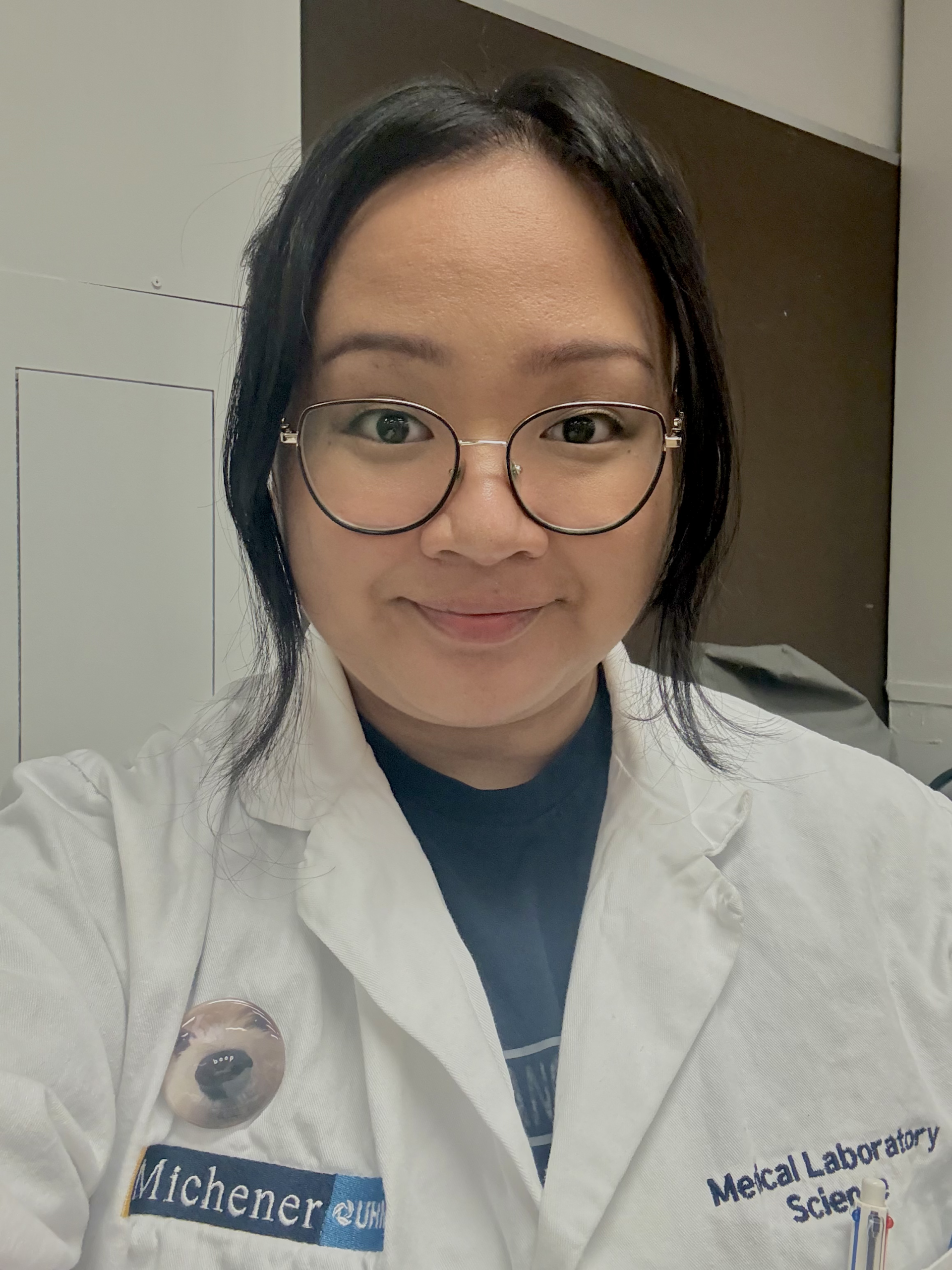
The People of Michener series profiles some of the students, staff and faculty who have chosen careers dedicated to helping others by pursuing healthcare through Michener.
Rather than choose between two competing loves, second-year medical laboratory science student Ren Manalo found a way to strike a balance between her mutual interests in science and history.
While she always gravitated towards science as a subject because she enjoys finding out how things work, Ren says her love of history can be traced back to watching the 1990s action film, The Mummy.
“I think that’s where it started, honestly, and from there it grew into a love of documentaries and YouTubers discussing history,” Ren says. “I find history to be fascinating.”
Ren’s path is an example of interdisciplinary success – after completing a Master of Arts in Physical and Biological Anthropology, studying the world’s first plague pandemic, she has her sights set on a career as a Medical Laboratory Technologist.
Ren had initially enrolled in pharmacology at the University of Toronto, but upon learning more about the diseases of the medieval world, she considered making a change. After a couple of years, she would switch majors to genome biology with double minors in anthropology and medieval studies.
“My mom was a bit concerned,” she says with a laugh.
Following graduation, Ren remained committed to both pursuits. While she had applied to Michener, she says she found a marriage of both interests when she was accepted for a postgraduate degree studying the first plague pandemic with evolutionary biologist Dr. Hendrik Poinar at McMaster University.
“Many people know about the second plague pandemic, the infamous ‘Black Death’, but there was a pandemic before that which happened from approximately 541 to 750 CE,” she says. “That was the first plague pandemic.”
Ren says her research focused on identifying the causative agent of the plague in the immediate area of Constantinople in the sixth century.
“1,500-year-old human teeth were sent to us, and essentially we cut them open using special techniques to extract ancient DNA and put them through next generation sequencing,” Ren says. “My thesis was about successfully finding evidence of Yersinia pestisin in one juvenile tooth.”
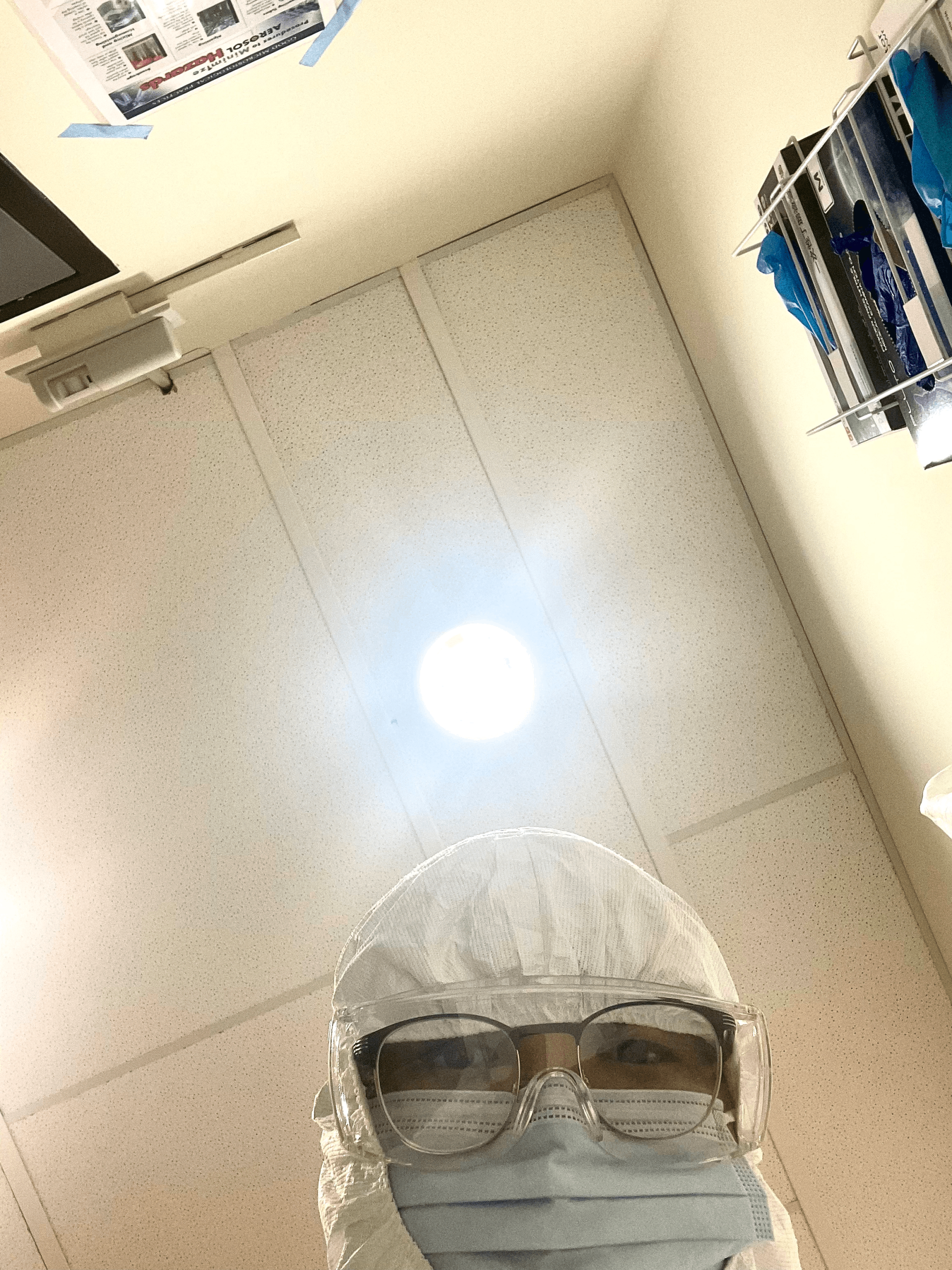
Her findings were recently published in the Winter 2025 issue of the journal, Studies in Late Antiquity. “It’s not in a science journal because my thesis tried to promote interdisciplinarity and make the science side of ancient DNA accessible for historians,” she says.
Following her postgraduate studies, Ren says she began to look for a stable career path that also spoke to her interests. This drew her back to Michener.
“I had spent a lot of time studying ancient disease and death, and I wanted to shift my focus back to the living.”
She says she chose medical laboratory sciences after her experience with lab work in grad school. “They stuck me in a lab for 10-to-12 hours a day, and I honestly loved it.”
Ren, who was born in the Philippines, says she never could have envisioned herself studying 1,500-year-old specimens from Turkish and Mediterranean sites, from a plague that ravaged the global population, at a Canadian institute, before shifting gears to enter the healthcare system.
“This journey has been a little surreal,” she says.
However, she says she hopes her path can pave the way for others to follow suit and take a chance and pursue their interests. “I feel very fortunate, but I am just one example of how following one’s passions can lead to a really great place,” she says.
“I’ve spent a lot of time focused on the spread of something bad in the form of a plague, but I hope by sharing my story it can help spread some good.”