About the Profession
Diagnostic medical sonography (ultrasound) is an important medical diagnostic imaging technology and is an integral part of the diagnostic process in all healthcare institutions in Canada.
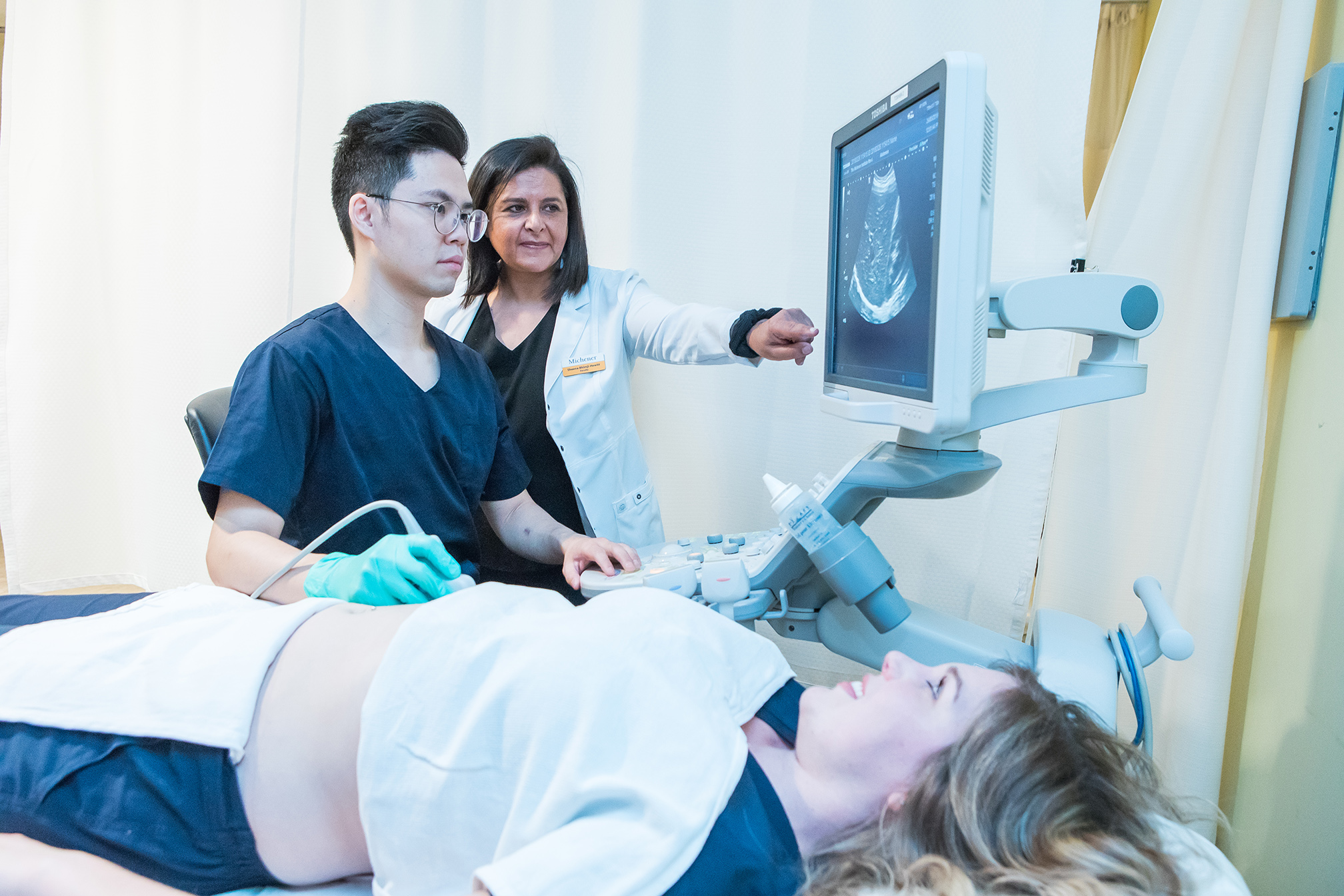
Ultrasound uses high-frequency sound waves to display real-time images of the soft tissue structures in the human body such as the abdomen, pelvis (male and female), breast, thyroid, musculature and vessels. It also plays a large role in assessing fetal development, well-being and fetal anatomy and can also be used to assess the viability of different types of organ transplants by assessing the vascular flow.
Sonographers use ultrasound technology to assess anatomical structures and blood flow. An ultrasound exam is dynamic and heavily relies on the accuracy and skills of the sonographer. They collaborate with radiologists to provide an overall impression of their assessment that serves as a key component to the radiologist’s diagnosis and follow-up recommendations for patient management.
Many sonographers work in interdisciplinary teams with other medical imaging colleagues, radiologists, nurses and referring physicians. Career opportunities may be found in:
- Hospitals
- Independent health facilities (clinics)
- Research
- Management
- Vendor applications or sales
- Education
About the Program
Ultrasound at The Michener Institute of Education UHN is a post-graduate accredited program that offers a combination of didactic, simulated and clinical components to provide entry-to-practice knowledge, skills and judgement that meet Sonography Canada’s National Competency Profile.
During the clinical year in the second year of studies, students attempt the Canadian Clinical Skills Assessment (CCSA) as part of the national credentialing process by Sonography Canada for generalist sonographers. Students are required to pass the CCSAs in order to successfully complete the program.
Upon successful completion of the credentialing exams, students can apply for registration with the College of Medical Radiation and Imaging Technologists of Ontario (CMRITO) allowing them to practice within the Province of Ontario. Graduates are also able to work in all provinces across Canada with the Generalist Credential from Sonography Canada, provided they meet the provincial requirements. Graduates are also eligible to challenge the written Core and Generalist exams by Sonography Canada.
The Ultrasound program is accredited by Accreditation Canada. Accreditation is a quality improvement process that ensures educational programs meet national standards and that students acquire the knowledge, skills, and competencies for safe and effective care at entry to practice.
Curriculum - Ultrasound
| Year | Semester | Course Code | Course Title |
|---|---|---|---|
| 1 | Fall | PHUS110 | Physics of Ultrasound |
| 1 | Fall | ABUS111 | Ultrasound of the Abdomen I |
| 1 | Fall | APIG110 | Cross-Sectional Anatomy |
| 1 | Fall | USUS112 | Ultrasound Scanning I |
| 1 | Fall | PPUS110 | Professional Practice I |
| 1 | Winter | ABUS121 | Sonographic Pathology of the Abdomen & Superficial Structures |
| 1 | Winter | OBUS121 | Obstetrics and Gynecology |
| 1 | Winter | USUS123 | Ultrasound Scanning II |
| 1 | Summer | SCUS131 | Ultrasound Simulated Clinical |
| 1 | Summer | PPUS130 | Professional Practice II |
| 1 | Summer | RMUS250 | Evidence Based Clinical Practice |
| 2 | Fall/Winter | CLUS130 | Clinical Practicum I |
| 2 | Fall/Winter | CLUS240 | Clinical Practicum II |
The faculty were very supportive and flexible in response to the changing conditions of the COVID-19 pandemic to ensure that we could be successful.